
Common Core: A Step Backwards for English Standards…you decide!

Little attention has been paid to the academic quality of the mathematics, literature, and writing standards that NGA and CCSSO developed, despite the fact that they were not internationally benchmarked or research-based. The fatal flaws in the Common Core English Language Arts (ELA) standards went unnoticed because over 45 state boards of education and/or their governors hastily adopted the standards in 2010, in some cases long before they were written or finalized.
Most states agreeing to adopt the Common Core English Language Arts standards may well have thought they were strengthening high school English coursework. However, the architects of Common Core’s ELA standards never claimed that their standards would do so. Rather, they claimed that these standards would make all students “college-ready.”
This extravagant promise was and remains undergirded by a belief that a heavy dose of informational or nonfiction reading (50 percent of reading instructional time in the English class at every grade level) will result in greater college readiness than a concentrated study of complex literature in the secondary English class will.
Loss of Classic Literature
Why do Common Core’s architects believe that reading more nonfiction and “informational” texts in English classes (and in other high school classes) will improve students’ college readiness?
Their belief seems to be based on what they see as the logical implication of the fact that college students read more informational than literary texts. However, there is absolutely no empirical research to suggest that college readiness is promoted by informational or nonfiction reading in high school English classes (or in mathematics and science classes).
In fact, the history of the secondary English curriculum in 20th-century America suggests that the decline in readiness for college reading stems in large part from an increasingly incoherent, less challenging literature curriculum from the 1960s onward. This decline has been propelled by the fragmentation of the year-long English course into semester electives, the conversion of junior high schools into middle schools, and the assignment of easier, shorter, and contemporary texts—often in the name of multiculturalism.
From about the 1900s—the beginning of uniform college entrance requirements via the college boards—until the 1960s, a challenging, literature-heavy English curriculum was understood to be precisely what pre-college students needed. Nonetheless, undeterred by the lack of evidence to support their sales pitch, Common Core’s architects divided all of the ELA reading standards into two groups: 10 standards for informational reading and nine for literary reading at every grade level.
This misplaced stress on informational texts (no matter how much is literary nonfiction) reflects the limited expertise of Common Core’s architects and sponsoring organizations in curriculum and in teachers’ training. This division of reading standards was clearly not developed or approved by English teachers and humanities scholars, because it makes English teachers responsible for something they have not been trained to teach and will not be trained to teach unless the entire undergraduate English major and preparatory programs in English education are changed.
Common Core’s damage to the English curriculum is already taking shape. Anecdotal reports from high school English teachers indicate that the amount of informational or nonfiction reading they are being told to do in their classroom is 50 percent or more of their reading instructional time—and that they will have time only for excerpts from novels, plays, or epic poems if they want students to read more than very short stories and poems.
Long-Term Consequences
A diminished emphasis on literature in the secondary grades makes it unlikely that American students will study a meaningful range of culturally and historically significant literary works before graduation. It also prevents students from acquiring a rich understanding and use of the English language. Perhaps of greatest concern, it may lead to a decreased capacity for analytical thinking.
Indeed, it is more than likely that college readiness will decrease when secondary English teachers begin to reduce the study of complex literary texts and literary traditions in order to prioritize informational or nonfiction texts. This is because, as ACT (a college entrance exam) found, complexity is laden with literary features: It involves characters, literary devices, tone, ambiguity, elaboration, structure, intricate language, and unclear intentions. By reducing literary study, Common Core decreases students’ opportunity to develop the analytical thinking once developed in just an elite group by the vocabulary, structure, style, ambiguity, point of view, figurative language, and irony in classic literary texts.
It will be hard to find informational texts with similar textual challenges (whether or not literary nonfiction). A volume published in 2011 by the National Council of Teachers of English on how English teachers might implement Common Core’s standards helps us to understand why. Among other things, it offers as examples of informational or nonfiction texts selections on computer geeks, fast food, teenage marketing, and the working poor. This is hardly the kind of material to exhibit ambiguity, subtlety, and irony.
Common Core Is Not the Answer
An English curriculum overloaded with advocacy journalism or with “informational” articles chosen for their topical and/or political nature should raise serious concerns among parents, school leaders, and policymakers.
Common Core’s standards not only present a serious threat to state and local education authority, but also put academic quality at risk. Pushing fatally flawed education standards into America’s schools is not the way to improve education for America’s students.

DreamBox Learning launches global online community on edWeb.net for educators implementing blended learning models for mathematics

FOR IMMEDIATE RELEASE

PRINCETON, NJ, February 12, 2013 – DreamBox Learning® (www.dreambox.com), the leading Intelligent Adaptive Learning™ company, and edWeb.net, a professional social and learning network for the education community, today announced the launch of Blended Learning, an online professional learning community (PLC) to support educators exploring and implementing blended learning models for elementary mathematics.

The Blended Learning PLC will provide a collaborative forum for administrators, math coaches, curriculum coordinators, and teachers of mathematics to gather and share insights as schools and districts implement blended learning models at the classroom level.

“As the pioneer of intelligent adaptive learning, DreamBox Learning has redefined personalized instruction in the classroom,” said Lisa Schmucki, founder and CEO of edWeb.net. “Blended learning is an area of great interest to our online professional learning community and we’re thrilled to provide such high caliber experts to educators to improve their knowledge and help them implement best practices in classrooms.”

As part of the partnership with edWeb.net, DreamBox Learning will host a monthly Blended Learning webinar series as well as provide a dedicated blog and access to resources and tools that will allow educators to receive a Continued Education (CE) certificate.

The next webinar, Principal’s Guide to Blended Learning for Elementary Mathematics, is scheduled for February 27 at 3:00 p.m. EST. The session will be presented by well-known author and educator Dr. Jeff Piontek, who will present the keys to implementing successful blended learning models that leverage the powerful combination of real-time and online interaction to improve math teaching and student learning.

The joint effort benefits both edWeb.net and DreamBox Learning. “Joining forces with edWeb.net provides DreamBox Learning with the unique opportunity to engage directly with forward-thinking administrators and educators who are actively exploring innovative ways to increase student confidence and achievement in math through blended learning and differentiation,” said Jessie Woolley-Wilson, President and CEO at DreamBox Learning. “We’re very excited to share our knowledge and success stories as well as learn from the community as we collectively continue to inspire positive outcomes in education.”

Administrators and math educators are invited to join the Blended Learning community. All webinars and content are free. Register for the February 27 webinar. Listen to an interview with edWeb.net’s Lisa Schmucki and Dr. Tim Hudson, Director of Curriculum Design at DreamBox Learning discuss the rise in blended learning and the launch of the Blended Learning PLC. More information about the overall program can be found at www.edweb.net/blendedlearning.

About edWeb.net

edWeb.net is a professional social and learning network for the education community that makes it easy to connect and collaborate with colleagues, share information and best practices, and create professional learning communities. edWeb makes it easy to move forward faster with ideas that transform teaching and learning. edWeb hosts free professional learning communities on key topics in education and won the 2012 Edublog Award for Best Free and Open Professional Development for Educators. edWeb reaches 3.5 million educators in the U.S. through our membership and our partnership with MCH Strategic Data. Learn more at www.edweb.net.

About DreamBox Learning

DreamBox Learning was founded in 2006 in Bellevue, Washington and launched its first online learning product in January 2009. The platform has won more than 20 top education and technology industry awards and is in use in all 50 states. DreamBox Learning Math offers a groundbreaking combination of intelligent adaptive learning, rigorous elementary mathematics curriculum, and motivating learning environment. The innovative DreamBox platform captures every decision a student makes while working in the program and adjusts the student’s learning path appropriately, providing millions of individualized learning paths, each one tailored to a student’s unique needs.

DreamBox Learning closed its Series A round of funding in December 2011 led by private investors Reed Hastings, John Doerr and Deborah Quazzo, as well as GSV Capital Corp. (NASDAQ: GSVC).

###

PR Contacts:

edWeb.net:
Lisa Schmucki, 908-407-2755 or lisa@edweb.net

Foghorn Public Relations for DreamBox Learning:
Mary Leddy, 508-872-3369 or mleddy@foghornpr.com
Shelly Eckenroth, 717-852-7060 or seckenroth@foghornpr.com

Links

District Administration Magazine Webinar on Blended Learning…..check it out

Blended learning – the powerful combination of real-time and online interaction— is being adopted across the country to improve math teaching and student learning. By implementing an online supplemental math program that utilizes intelligent adaptive learning™ technology, your school or district can easily and effectively provide personalized instruction in the classroom and at home for all students, regardless of level or ability. Attend this web seminar to learn how to get started with blended learning and the keys to successfully adopting this latest technology to improve achievement of your elementary math students.

Topics will include:

  • The importance and efficacy of blended learning
  • Evaluating curriculum and blended learning model options
  • The latest and most effective technology used in elementary-level mathematics

http://www.districtadministration.com/webseminar/principal%E2%80%99s-guide-blended-learning-elementary-mathematics

20 Tips for Creating a Professional Learning Network

“20 Tips for Creating a Professional Learning Network” by Miriam Clifford first appeared on the InfomED blog.

Networking is a prime form of 21st century learning.  The world is much smaller thanks to technology.  Learning is transforming into a globally collaborative enterprise.  Take for example scientists; professional networks allow the scientific community to share discoveries much faster.

Just this month, a tech news article showcased how Harvard scientists are considering that “sharing discoveries is more efficient and honorable than patenting them.”  This idea embodies the true spirit of a successful professional learning network: collaboration for its own sake.

As educators, we aim to be connected to advance our craft.  On another level, we hope to teach students to use networks to prepare for them for a changing job market.  But what is the best way to approach PLNs?

Learning networks are based on the theory of connectivism, or learning from diverse social webs.  Connectivism implies that learning relies on communicating ideas with others.  PLNs facilitate learning through meaningful interactions.  The advantages of PLNs today are two-fold.  In one way, they can improve classroom teaching and help develop new projects. On the other hand, they act as a form of communal intelligence that changes societal perceptions.

What are some ways to grow your PLN and improve the quality of your interactions?  As you will see, there are diverse ways to build your network and many new management tools.   Here are some simple tips:


10 Tips For Using PLN’s

  1. Keep the spirit of collaboration as your driving force.  PLNs are all about working together.  Be reciprocal and resourceful.  Don’t think about what you have to gain, first think about what you have to give. Why?  Because it’s the right thing to do.  By buying into the process and sharing useful information, your PLN grows naturally.  Collaboration creates a common ground and allows others to see your interests.  Genuine interest builds a solid, authentic network.  Try to see the big picture of how your ideas can change the world.  Social responsibility is the best kind of motivation for establishing a PLN.


  1. Join an online community.  Nings are online rings of people with similar interests. Sharing ideas and contacting people for direct feedback is more effective in a community setting.   Communities such as, Classroom 2.0  and The Educator’s PLN provide a meaningful circle of experts.  They provide professional development resources, such as online events, and are a great place to start networking.  Plus, using MightybellEdmodo, or Ning you can create your own virtual space to share pictures, documents, calendars, or projects.


  1. Join a Meetup group.  Meetups are common thread interest groups that meet in the real world.  The groups can also extend in social networks.  For instance, social studies teachers in your district or city might create a group to share teaching ideas.  Meetups take online networks and bring them into the real world.  And if you can’t meet online try using a cyberspace, like Google+ HangOut, SecondLife, or Skype. Some university academics even have virtual labs on SecondLife.


  1. Become a beacon of light.  PLNs rely on open sharing of information.  So if you know something, share it!  It’s best to start with a specific interest and then grow into other topics as time goes on. Become an expert in your niche by researching current trends.  This will draw a larger following on your network, because you can provide a novel source of information.  You might write a blog, start a Scoopit page to repost interesting articles, share a free tool, or create a Youtube video.  Cater to your strengths and use what’s comfortable for you.


  1. Don’t be afraid to ask questions.  After all, PLNs are all about learning.  But don’t ask questions that you can easily research yourself.  Try simple searches on TED talks, Wikis, blogs, or news articles before posting a question. Try to be specific and think of how a question might generate interest from others.  For example, you may want to refer to an article or research study when asking a question.  Be specific!  This will generate the best answers.


  1. Be an active participant.  Brain power is the main asset of a PLN.  Spend some time to identify a specific cause and communicate it on your profile.  Let your knowledge of a specific cause help grow your PLN.  Keep up to date with your niche.  Stay relevant.  Try to post at least once a week.


  1. Remember to be polite and acknowledge contributions to the rightful owner. Show common respect for the people in your network.  This may seem like common sense, but can be a pitfall.  It took me some time to learn “web etiquette” over the years, but it has helped me tremendously.   Send thank you notes, acknowledgements, and use your true voice.  Not only does it make the other person’s day, but it will help you gain more meaningful connections.


  1. Designate a professional and personal account.  I keep my social life on Facebook and my professional life on Twitter, LinkedIn, and Google+.  There can be some crossover, but it’s best to keep it minimal so things are easy to find.  Certain groups will appreciate different types of content.  Your Facebook friends might find your baby’s stories adorable, but your Twitter followers might not appreciate extra messages cluttering their inbox.  Do this in ways that are comfortable to you.  You might designate accounts for each sphere of your life.


  1. Create a landing page.  It may be a good idea to consolidate all of your accounts on a landing page.  A webpage or personal blog will make it easier for people to find you.  It will also create a space where you can showcase the different projects you are working on.


  1. Engage newbies.  It is best to include a mix of newbies, peers, and experts.  Having this type of diversity in knowledge allows you to increase your mentoring skills.  It keeps with the essence of collaboration.  One blogger in Australia provided a great visual and commentary on how varying levels of expertise are vital to developing a meaningful PLN.  He describes how he learned in a PLN learning MOOC that the 3’Rs have been replaced by the 3 C’s Collaborate, Communicate, and Create.  PLNS create new projects through the power of active collaboration.


10 Tools & Strategies for Establishing a Productive PLN

  1. Use DiigoEvernotePocket, or Delicious to bookmark links.  You can access them anywhere and on any device.  For example, Diigo is like creating your own personal library.  Diigo is the preferred tool for educators.
  2. It allows you to highlight paragraphs and clip pictures while you are reading.
  3. You can bookmark a page in a “virtual” library or online archive, even PDFs or videos.  You can add your own tags to search for information later.
  4. Your entire school and class can add Diigo as a group, so that you can share resources.  For example, a chemistry class might share a digital periodic table, online lessons, or practice assignments.  Here is a great video about how to set up Diigo specifically for education.  They have specific accounts for educators to create a shared school library.


  1. Use a reader to subscribe to blogs.  Google reader allows you to manage multiple subscriptions to blogs. This allows easier access to new research.  You can also use an application like Scribd or Yahoo News Social to publically share what you read with others.


  1. Establish your own platform. Consider establishing a blog site on WordPress or blogger.com.  A blog provides a worldwide stage to share your views of education. You can spread your passion and find kindred spirits.  From there, you can develop lasting connections and plan new projects.  Fellow bloggers will appreciate the time you put into creating meaningful materials. Your ideas can be then be re-shared as a link. Many teachers keep class webpage or use applications such as PB works to share ideas.


  1. Share on Twitter first. Twitter reigns king, for now.  Anything can change with technology, but Twitter is the most commonly used tool among academics for expanding PLNs.  LinkedIn, Facebook, and Google+ also provide access to different types of networks. Later, you can use other tools to further expand and manage your network, such as Skype and Google tools. Many new platforms are emerging so stay current by reading tech or social media news on a site such as, Mashable.


  1. Consider your role. The article “Individual Learning” sheds some light on learning roles. Consider your learning style when designing a specific approach to your PLN:
  2. Activist-Learning by doing, such as writing a blog.
  3. Reflector- Learn by reviewing situations, such as posting opinions to articles.
  4. Theorist-Prefer to learn by researching information and data, such as by creating a model.
  5. Pragmatist-Apply learning to real situations, such as by creating a project that uses PLNs in the classroom.

According to Wikipedia, PLN roles can include, “searcher, assemblator, designer of data, innovator of subject matter, and researcher”.


  1. Aggregate resources together. Applications like FlipToast and HootSuite allow you to merge all of your social media accounts into one interface. You may want to play around with different types of portals until you find the one that is right for you. Map out an organized plan for using your PLN. There is a great chart of resources for mapping out your PLN plan on this blog.


  1. Take a free course to learn about PLNs. MOOCs are Massive Online Open Courses that are free to the public.  For instance, this course complete with handouts shows you how to establish a PLN.  You learn actively by taking small steps to create your PLN, such as creating a blog, twitter account, and content.


  1. Stay current with new tools. For example, try Pearltrees. This is one of my favorite new tools for PLNs.  Pearltrees is basically a visual organizer for your links.  Pearls are collaborative and public.  You can add pearls as you browse and share them with others on Twitter and Facebook.  Customize your experience.   There are many specific tools on different applications that allow you to customize and organize your PLN to fit your own needs.  Chrome and Windows 8 have several free applications that are worth trying.


  1. Simplify logins. You can speed up the log in process by installing a Password management application.  To further simply your PLN, use Google to keep a shared document drive, email, chat, and Google+ networking in one place.


  1. Establish a classroom learning network. Share your own expertise with other educators on a website or blog.  Create a class website or teach students how to create their own PLN. You might want to design a classroom project that relies on using one aspect of PLNs.  Doing so allows you to learn new ways to use PLNs. A YouTube video, The Networked Student, does an excellent job of explaining how a student might engage in a PLN. Teach students how to establish a PLN in small steps.  For instance, they might use Google scholar to research a paper or share ideas on Google Hangouts.


PLNs are a powerful change agent. And in today’s world an online professional learning network is indispensable.  Technology allows easy access to an unparalleled network of professional resources. Growing your network can lead to opportunities for professional growth and help change the future of education.


Feel free to add the InformED team on Twitter, Facebook or Google+.


Read more: http://newsroom.opencolleges.edu.au/features/20-tips-for-creating-a-professional-learning-network/#ixzz2HaWJm6DB

Flipped Classrooms Need Flipped Leadership

This is a great post I found by  RANDALL G. SAMPSON, PHD on JANUARY 10, 2013. For more information about the author go to the bottom of the article. 

Educators are deeply engaged in the dialogue about the flipped class and how it works. It is great for teachers to be so engaged and ready to try a different method to engage their students in the learning process. Just as quickly as a teacher is burning with desire to learning a new practice, school leaders can become a wet blanket / barrier because their leadership style does not support teachers’ need for innovation and change. In order for teachers to gain the confidence in their innovative Flipped Classroom approach, a school’s leadership team / administration needs to adopt the practice of Flipped Leadership, also referred to as Distributed Leadership.

Too often, organizations misdiagnose social justice issues (gender, race, ethnicity, socio-economic status) as the impediment for growing a Distributed Leadership culture. I have found that the actual boundaries in schools that deter the growth of a Distributed Leadership culture are the tasks pertaining to safety/belonging; task-oriented industriousness and self-actualization/satisfaction (Ronald F. Ferguson, Senior Lecturer in Education and Public Policy at the Harvard Graduate School of Education and the Harvard Kennedy School and Senior Research Associate at the Malcolm Wiener Center for Social Policy). The culture of Distributed leadership has to be nurtured and grown over time; dynamic leaders and teachers realize that school culture is not a lock step event. In a thriving school culture there are multiple things occurring at the same time. Therefore, requiring a balance of tasks and Distributed Leadership in order to reach peak performance.

Types of Leadership Beliefs and Practices:

  1. Autocratic-Compliance: Top-Down Orders
  2. Participative-Collaboration: Team Approach: External Locus of Control
  3. Transformational Commitment-High Self-Efficacy: Internal Locus of Control

Autocratic Leaders:

For the most part, teachers and leaders can agree that top-down leadership results are a short-lived autocratic experience. These leaders are focused on assessing the checklist of goals accomplished and compliance driven. In such a situation teachers often double-down with passive aggressive behaviors; teachers are holding on until the top-down leader leaves, therefore leaving a clear void in innovative practices

Participative Leaders:

These are the leaders who seek to create a positive change in their school. Typically this person will recruit who they believe are strong teacher leaders in the building. The leaders will assign the teachers to various tasks and committees in order to accomplish school improvement goals or district wide initiatives. There is a high sense of external locus of control authorized by the principal who is micro-managing the unauthentic innovation process. At a cursory level people in the school are working together, but have not authentic engagement to create innovative practices and are compliance-oriented committals to the initiative.

Transformational Leaders:

The transformational Flipped Leadership style encourages learning to occur outside of the school and classrooms. Such dynamic leaders establish the conditions for teachers and students to try new methods and seeking innovative learning. Often time the school’s culture and innovation conditions do not reside within the expertise level of the principal or one individual. The ultimate goal is to for teachers and students to amplify their strengths by applying innovative learning to their real world experiences. Simply put, transformational leaders encourage student-learning tasks to be about the student and their world; building a strong sentiment for internal locus of control.

Leadership Pyramid.

Click on graphic to view larger size.

Distributed Leadership Boundaries: Safety/Belonging; Task-Oriented Industriousness; Self Actualization and Satisfaction

This post was written by

Randall G. Sampson, PhD

Randall G. Sampson, PhD –
Randall Sampson, PhD, ensures equity and access for students through innovative STEMLab, Fast Track, New Start models.


Links

7 Excellent iPad Games to Develop Kids Critical Thinking

This is a great site that I found online and wanted to share it with my readers. They have PHENOMENAL resources for a teacher and students. You can check their resources at http://www.educatorstechnology.com/ or by clicking on the link.
There is an app for everything these days. From health apps to travel apps, iTunes market is teeming with all kinds of apps. It only takes one click in a search engine to find what you want but as we always say not every app can do what its developers preach , you need to have a critical eye to evaluate the apps that will work for you. As teachers and educators, we are in a constant search for apps to use with our students and this is why we need to make sure we have recourse to checklists such as this one whenever we are to recommend apps.
Educational Technology and Mobile Learning has even made it way easier for teachers to pick the apps they want from some pre-made lists of apps organized according to each subject area. You can check them HERE.
In today’s post , we are providing you with a list of great games designed to improve your students critical thinking and creative powers.Check them out below and don’t forget to check the list we have posted before on iPad  Apps to Develop Kids Critical Thinking.
1- Feed the Head

 ” The iPad adaptation of our classic surrealist toy! Poke the Head. Prod the Head. Tug the Head… but most importantly, Feed the Head. Like a living cartoon, the Head will unfold and transform in surprising, startling, and hilarious ways.”


2-Where’s My Water

 “Where’s My Water? is a challenging physics-based puzzler complete with vibrant graphics, intuitive controls, and a sensational soundtrack. To be successful, you need to be clever and keep an eye out for algae, toxic ooze, triggers, and traps. “


3- RoomBreak

“Room Break is an adventure game about escaping.The purpose of this game is simple.Users will be detained to certain places and situations and they need to open the door of each room and escape.”

4- Cross Fingers Fee

 “Mobigame, the team behind the multiple award winning EDGE for iPhone and iPod touch, returns in full force with Cross Fingers, a unique game which challenges you to combine solid pieces in a gigantic tangram puzzle”

5- Doodle Fit

 “The task in Doodle Fit is simple: fit the given sets of blocks into the given shapes. Drag the blocks into positions in search for the layout that covers the whole shape. A level is complete when all blocks have been used and there is no more space free in the shape..”

6- Jelly Car

“JellyCar is a driving/platforming game for both iPhone and iPod touch. The game is about driving a squishy car through squishy worlds, trying to reach the exit. JellyCar features soft body physics for all of the objects in the world. Also your car can transform for a limited time to aid progression through the level “7- Geared for iPad

 “Geared is a radically new and innovative puzzle game; a unique addition to its genre. The first and only Gear-based game with absolutely no snap-grid. Geared delivers complete and total freedom to the player, bestowing every puzzle with a near infinite array of choices. “

8- 7 Little Words 

 “7 Little Words is FUN, CHALLENGING, and EASY TO LEARN. We guarantee you’ve never played anything like it before. Give 7 Little Words a try today!”

Sweden’s Newest School System Has No Classrooms

I found this great article about new and innovative classrooms written by . It was originally posted on the website Edudemic in September 2012. Click the link to see the original article.
There’s a whole new classroom model and it’s a sight to behold. The newest school system in Sweden look more like the hallways of Google or Pixar and less like a brick-and-mortar school you’d typically see.

There are collaboration zones, houses-within-houses, and a slew of other features that are designed to foster “curiosity and creativity.” That’s according to Vittra, which runs 30 schools in Sweden. Their most recent school, Telefonplan School (see photos below via Zilla Magazine) in Stockholm, could very well be the school of the future.

Architect Rosan Bosch designed the school to encourage both independent and collaborative work such as group projects and PBL. Even the furniture is meant to get students learning. Bosch says each piece is meant to “aid students in engaging” while working.

The un-schoolness doesn’t stop with the furniture and layout though. The school has no letter grades, students learn in groups based on their level and not age.

Most of all, admission to the school is free as long as one of the child’s parents pays taxes in Sweden and the child has a ‘personal number’ which is like a social security number to our U.S. readers.

Telefonplan School in Sweden
This post originally appeared in Edudemic.Com  Online (http://edudemic.com/2012/09/swedens-newest-school-system-has-no-classrooms/)

Classrooms for the next generation?

Star Trek

This article was originally posted (http://www.reuters.com/article/2012/11/23/us-science-desks-idUSBRE8AM00320121123)

FASCINATING: A Durham University study found that Star Trek-style touchscreens can have benefits for students’ maths skills.

 Scientists designing and testing what they hope might become the classroom of the future have found that Star Trek-style multi-touch, multi-user desks can boost children’s maths skills.

A three-year project with 400 eight to 10-year olds found that using interactive “smart” desks can have benefits over doing maths on paper, and that pupils are able to improve their fluency and flexibility in maths by working together.

“Our aim was to encourage far higher levels of active student engagement, where knowledge is obtained by sharing, problem-solving and creating, rather than by passive listening,” said Liz Burd of Britain’s Durham University, who led the study.

The research team, whose findings were published in the journal Learning and Instruction, designed software and desks that recognise multiple touches on a desktop using infrared light vision systems.

The desks are built into furniture of the classroom to help encourage more collaboration, and are networked and linked to a main smartboard. A live feed of the desks goes directly to the teacher who can intervene quickly to help a pupil while allowing group work to continue.

Burd’s team found that 45 percent of pupils who used a maths programme on the smart desk system increased the number of unique mathematical expressions they created, compared with 16 percent of those doing it on paper.

Using the new desks helped children work together and solve problems using inventive solutions, the researchers said.

“We found our tables encouraged students to collaborate more effectively,” said Burd. “Such collaboration just did not happen when students used paper-based approaches.”

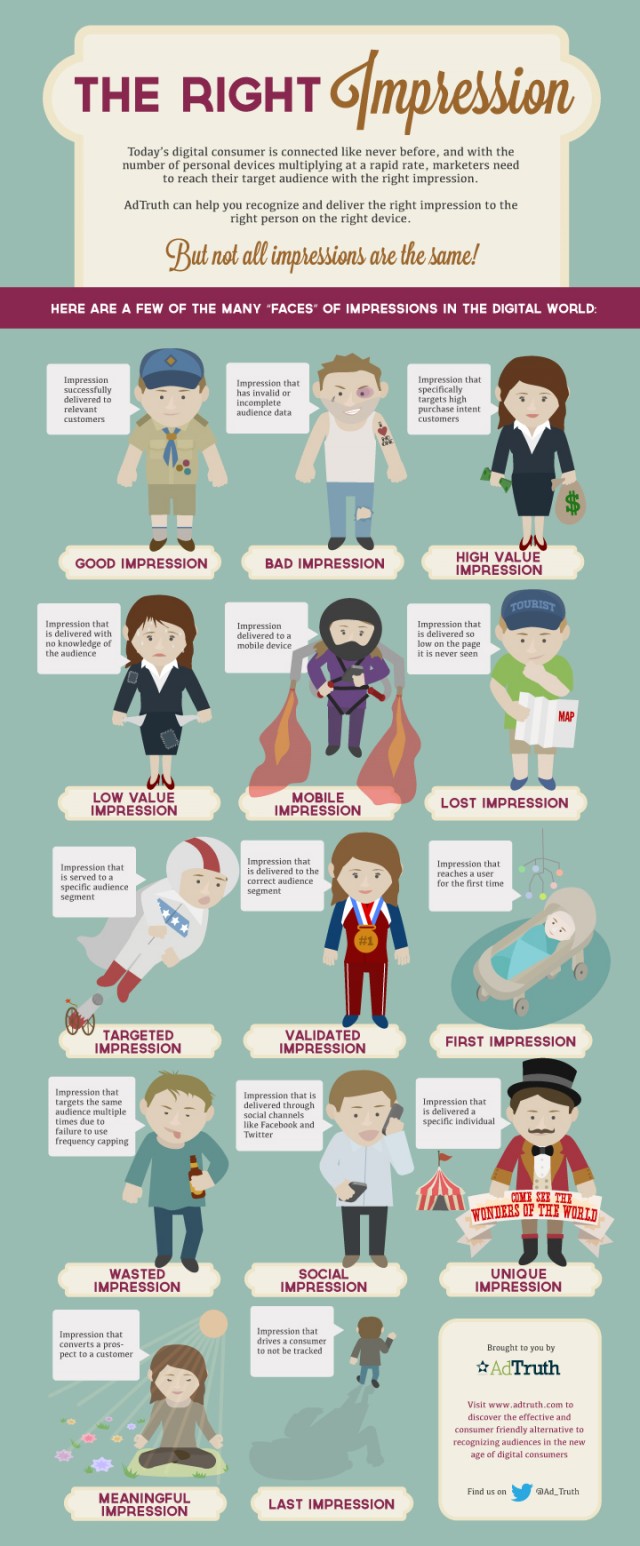
You never get a second chance at a first impression…..

You never get a second chance to make a first impression,” Don’t make the mistakes that many have made before you.

In today’s world, the first impression idea still holds true. However, digital consumers and social media allow us to connect in ways that we could never have in the past. And the impression that you leave on your Facebook page, Twitter stream, or website could have some people making judgments and drawing conclusions before they actually get to know you, your company, or your products.

What is your goal? What is the impression you are trying to create for yourself? What kind of customers are you attracting by delivering the impression you project?  It’s important to make sure that you always have the best foot forward in whatever business you are in to build an impressive social networking presence with the right impression.

This post originally appeared in The Marketing Tech Blog (http://www.marketingtechblog.com/infographic-whats-your-social-media-impression/)